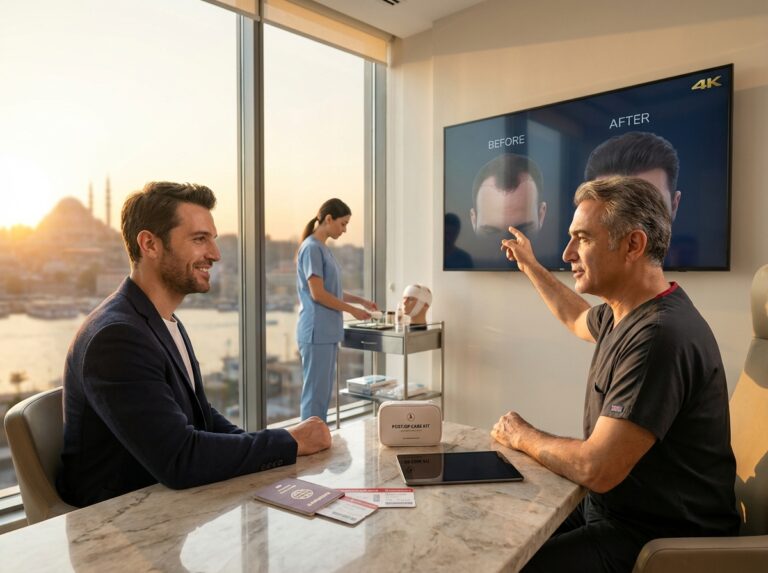
Combining veneers for a Hollywood smile with facial cosmetic procedures requires careful planning—especially when considering surgery abroad. This article guides medical tourists through clinical sequencing, choosing accredited clinics and surgeons, travel logistics, recovery timelines, and risk management. Learn how to coordinate dental and facial teams, use digital smile design and telehealth, and plan a safe, cost-effective international cosmetic trip with confidence.
Understanding veneers and the Hollywood smile
The idea of achieving a complete facial and smile transformation in a single trip is incredibly appealing. It’s not just about saving on airfare; it’s about consolidating recovery time and ensuring the final result is harmonious. When planned correctly, combining a Hollywood Smile with facial procedures creates a synergy that is difficult to achieve when treatments are spaced years apart. The primary benefit is cohesive aesthetic planning, where your cosmetic dentist and plastic surgeon collaborate, using your new smile as a blueprint for facial enhancements, or vice versa. This ensures your teeth provide the right support for your lips and that your smile line complements your facial structure. This integrated approach saves time, reduces overall costs, and offers the psychological advantage of a single, transformative experience rather than a series of smaller, disconnected ones.
However, this efficiency comes with significant tradeoffs that demand careful consideration. Combining procedures means a longer time under anesthesia, which carries its own set of risks. Your immediate post-operative recovery will be more challenging, with compounded swelling from both dental and facial work. Perhaps the most critical risk is infection, especially when oral surgery (like implant placement) is combined with procedures like rhinoplasty or a lip lift, where the surgical fields are close. Managing this requires a highly skilled, multidisciplinary team in a facility equipped for complex cases. This is not a journey to undertake with a clinic that cannot demonstrate extensive experience in successfully managing combined treatment plans.
Successful outcomes depend on proper clinical sequencing, which follows a strict logic to minimize risks and optimize the aesthetic result. Here are the fundamental rules:
- Major Facial Surgery Before Final Veneers. For procedures like rhinoplasty, the final position of your upper lip can change as swelling subsides over several months. Placing permanent veneers before this would be a mistake, as the smile might not fit the new facial contours. The standard protocol is to perform the rhinoplasty, allow 2 to 3 months for the majority of swelling to resolve, and then proceed with the final veneer placement.
- Temporary Veneers as a Surgical Guide. During the waiting period, temporary restorations play a crucial role. These provisional veneers are not just placeholders; they are a 3D preview of your future smile. A plastic surgeon can use them as a guide for a lip lift or chin augmentation, ensuring the facial changes are perfectly proportioned to the new teeth.
- Injectables Last. Botox and fillers should almost always be done after your permanent veneers are bonded. Your new smile creates a new foundation. It’s best to wait at least two weeks post-veneering to allow the tissues to settle before adding fillers to the lips or cheeks.
To give you a clearer picture, here are some sample integrated timelines for common combinations:
Veneers with Rhinoplasty (The Safest Approach)
This typically requires two separate trips or one very extended stay. Trip 1 (approx. 10-14 days) involves the rhinoplasty surgery and, if possible, the initial tooth preparation and placement of high-quality temporary veneers. You would then return home to heal. Trip 2 (3-4 months later, approx. 7-10 days) is for the final impressions and bonding of your permanent porcelain veneers once your facial profile has stabilized.
Veneers with a Lip Lift or Chin Augmentation
This can often be accomplished in a single trip of about 14 to 21 days. Week 1 would be dedicated to the facial surgery. After about 10-12 days, once the initial, significant swelling has subsided and sutures are removed, your dentist can proceed with the final stages of your veneer work. The temporary veneers placed before your facial surgery would have guided the surgeon’s work.
Veneers with Botox and Fillers
This is the most straightforward combination, requiring a stay of about 7 to 10 days. Your veneer work would be completed first. After a week of letting your gums heal and ensuring you are happy with the bite and feel, the injectable treatments can be administered to enhance the areas around your new smile.
It is crucial to understand that combining procedures is not suitable for everyone. The ideal candidate is in excellent overall health, a non-smoker (or willing to quit completely for an extended period), and has realistic expectations about the recovery process. Patients with major systemic illnesses like uncontrolled diabetes, complex full-mouth rehabilitations involving multiple extractions and bone grafts, or those with uncontrolled teeth grinding (bruxism) should not attempt to combine major procedures. Safety must always be the top priority, and sometimes a staged, slower approach is the better path to a beautiful and lasting result.
Planning your plastic surgery trip abroad step by step
Embarking on a journey for a combined dental and facial transformation requires meticulous planning. This isn’t just a vacation; it’s a significant medical undertaking where your safety and results are paramount. Breaking the process down into manageable steps turns a daunting task into an achievable goal.
Choosing Your Destination and Clinic
Accreditation and Credentials.
Your search should begin and end with safety. Prioritize clinics with internationally recognized accreditation, such as from the Joint Commission International (JCI). This is a non-negotiable benchmark for quality and patient safety. Next, verify the specialists. Your cosmetic dentist should ideally be a member of a respected organization like the American Academy of Cosmetic Dentistry (AACD). Your plastic surgeon should be board-certified and a member of a global body like the International Society of Aesthetic Plastic Surgery (ISAPS). Also, confirm your surgeon has admitting privileges at a reputable local hospital; this is a critical safety net if complications arise. Red flags include clinics that can’t provide proof of these credentials or use high-pressure sales tactics.
Verifying the Professionals.
Don’t just take their word for it. You can often verify a doctor’s medical license on the official website of the country’s medical board. Look up surgeons on platforms like PubMed to see if they have contributed to peer-reviewed research, a strong indicator of expertise. Check their affiliations with professional societies directly on those societies’ websites. Scrutinize their before-and-after portfolios for consistency, high-quality results, and patients with similar starting points to your own. Look for independent patient reviews on platforms like RealSelf or WhatClinic, but remain critical, as reviews can be manipulated.
The Virtual Consultation and Treatment Plan
A thorough teleconsultation is your most important planning tool. Be prepared to send high-quality documentation. This includes recent intraoral 3D scans (STL files from a local dentist), a complete medical and dental history, and a comprehensive set of photos. For your face, this means front, side, and 45-degree angle shots, both smiling and at rest. For your teeth, include clear shots of your smile from the front and sides, as well as images of your upper and lower arches.
During the consultation, ask specific questions:
- How will the dental and surgical teams coordinate my care?
- What type of anesthesia will be used, and who is the anesthesiologist?
- What is the detailed timeline for my procedures, recovery, and final veneer placement?
- What materials will be used for my veneers (e.g., E.max, Zirconia)?
The outcome should be a detailed, written treatment plan and an itemized quote. Insist on receiving a comprehensive informed consent document in English that you can review and sign before you travel.
Financial and Legal Clarity
Cost transparency is key. A vague quote is a major red flag. Request an itemized breakdown that includes:
- Surgeon and cosmetic dentist fees
- Anesthesiologist fees
- Clinic or hospital facility costs
- Cost of veneers, implants, or other materials
- Lab work and imaging fees
- Follow-up appointments
Remember to budget separately for flights, accommodation, and daily expenses. Crucially, set aside a contingency fund of at least 20% of your total trip cost to cover unexpected medical needs or an extended stay. Legally, understand that malpractice laws are based on the country where the surgery occurs, which limits your recourse. Secure a written patient agreement that outlines the clinic’s policy on revisions and a separate warranty for your dental prosthetics from the lab.
Travel Logistics and Recovery Planning
For combined procedures, plan a conservative stay of 14 to 21 days. This allows for the initial, most critical phase of recovery and ensures you can attend all necessary follow-up and final veneer cementation appointments. Traveling with a companion is highly recommended for both practical and emotional support. Before you leave, discuss your medication plan with the clinic, including any pre-operative antibiotics. Check for required vaccinations and purchase comprehensive travel insurance that specifically covers medical complications and emergency evacuation. Finally, inform your home dentist of your plans. Provide them with your treatment plan and establish a line of communication for seamless continuity of care upon your return.
Contingency Planning and Final Checks
Hope for the best but plan for the worst. Create a simple contingency document before you go.
My Contingency Plan
Clinic Name: [Clinic Name]
Primary Coordinator Contact (Phone/WhatsApp): [Contact Info]
Surgeon's Emergency Contact: [Contact Info]
Dentist's Emergency Contact: [Contact Info]
Nearest Reputable Hospital: [Name, Address, Phone]
My Hotel Address: [Address]
Local Emergency Services Number: [e.g., 911, 112]
Insurance Policy Number & Contact: [Policy Info]
When choosing between a medical tourism facilitator and booking directly, weigh the pros and cons. Facilitators can simplify logistics but may limit your clinic choices. Direct booking gives you more control but requires more research. Finally, use this pre-departure checklist to ensure you have everything in order.
Pre-Departure Checklist:
- Flights and accommodation booked
- Passport and visa confirmed
- Comprehensive medical travel insurance purchased
- Contingency fund secured (20% of total cost)
- All pre-operative instructions reviewed and followed
- Arrangements made for a travel companion
- Home dentist briefed on your treatment plan
- All necessary documents printed and saved digitally
Documents and Photos to Collect:
- Signed Treatment Plan and Itemized Quote
- Signed Informed Consent Forms (in English)
- Veneer/Prosthetic Warranty Documentation
- All Medical and Dental Records (Pre-op and Post-op)
- High-Resolution Pre-Operative Facial Photos (Front, Profile, 45-degree)
- High-Resolution Pre-Operative Dental Photos (Full smile, Arches)
- Digital Intraoral Scans (STL files)
- Post-Operative Photos Before Departure
Frequently Asked Questions about veneers and facial procedures abroad
After you’ve mapped out the big picture, the small questions start to pop up. This is completely normal. Combining major dental work with facial surgery is a big decision, and the details matter. Think of this section as a conversation about the common worries and “what ifs” that patients have. Getting these answers is a critical step toward feeling confident and safe.
Is it safe to do both dental and facial procedures in one trip?
Yes, it can be safe, but only for the right candidate and at the right clinic. The key is having a healthy baseline and choosing a facility with an experienced, multidisciplinary team that can manage the combined stress on your body. The risk of infection is slightly higher, around 2-5%, when oral and facial surgeries overlap, but this is manageable with strict protocols.
Recommended Minimum Action: Get formal clearance from both the plastic surgeon and the cosmetic dentist at your chosen clinic. Ensure they present a unified, sequential treatment plan.
Red Flag: A clinic that says “yes” to everyone without a thorough medical review or dismisses questions about the risks of combining procedures.
How long must I stay abroad for combined work?
You should plan for a minimum of 14 to 21 days. This isn’t a vacation you can rush. A typical timeline involves your facial surgery first, followed by about a week of initial recovery for major swelling to subside. Then, your dental team can complete the final veneer fittings and cementation in the second or third week.
Recommended Minimum Action: Ask the clinic for a detailed, day-by-day schedule. Book flexible return flights in case you need an extra day or two for recovery.
Red Flag: Any clinic promising a full facial and smile makeover in under 10 days. This is a sign of rushed work, which compromises both safety and results.
What are the typical cost differences and how reliable are price comparisons?
The savings are significant, often between 50-70% compared to U.S. prices. A full set of high-quality porcelain veneers that might cost $20,000 in the States could be closer to $8,000 abroad. However, initial quotes can be deceptive if they aren’t all-inclusive.
Recommended Minimum Action: Insist on a fully itemized quote that breaks down surgeon fees, anesthesiologist fees, hospital charges, lab costs for the veneers, and post-op care. Ask specifically what is not included.
Red Flag: A clinic offering a single “package price” without any details. Be wary of hidden fees for things like taxes, medications, or follow-up visits.
What credentials and accreditations should I insist on?
Don’t compromise on this. The clinic or hospital should have international accreditation, like from the Joint Commission International (JCI). The plastic surgeon should be a member of a reputable international society like ISAPS, and the cosmetic dentist should have credentials from an organization like the American Academy of Cosmetic Dentistry (AACD) or a local equivalent.
Recommended Minimum Action: Independently verify these credentials. Check the JCI website for the hospital’s status and look up the doctors on their respective professional society websites.
Red Flag: Vague claims of being “internationally trained” or “board-certified” without providing specific, verifiable affiliations.
How are anesthesia and infection risks managed when procedures overlap?
Combined procedures are typically performed under general anesthesia administered by a board-certified anesthesiologist. To manage infection risk, top clinics use prophylactic IV antibiotics before surgery, maintain separate sterile fields as much as possible, and coordinate the procedures to minimize contamination.
Recommended Minimum Action: During your consultation, ask directly about their protocol for preventing infection in combined cases and who will be administering your anesthesia.
Red Flag: A clinic that seems casual about these risks or doesn’t have a dedicated anesthesiologist on their team.
How soon can I have injectables relative to veneer cementation?
Wait until after your dental work is completely finished. The ideal timing is to get any fillers or Botox at least two weeks after your final veneers are bonded. This allows any residual swelling from the dental work to resolve, ensuring the injectables are placed accurately to complement your new smile.
Recommended Minimum Action: Schedule injectables for the very end of your trip or, even better, with a trusted provider once you return home.
Red Flag: A clinic pushing to do fillers and Botox on the same day as your veneer preparation or cementation.
What happens if a veneer fails after I return home?
This is a critical point to clarify beforehand. Reputable clinics offer a warranty on their work. Dental labs typically warranty the physical veneers for 2-5 years against defects. The clinic may offer a 1-year warranty on the placement. However, this usually only covers the cost of the replacement veneer, not your flights and accommodation to return for the repair.
Recommended Minimum Action: Get the full warranty policy in writing. Understand the exact procedure for making a claim from abroad.
Red Flag: A clinic with no written warranty or one that becomes unresponsive when you ask about post-treatment complications.
Who bears responsibility for complications and revisions?
Your patient agreement or contract should clearly state this. Generally, the clinic is responsible for fixing direct issues with their work, but the patient is responsible for all travel-related costs for a revision trip. Your legal recourse abroad is very limited compared to the U.S.
Recommended Minimum Action: Read every word of the consent forms and patient agreements. Purchase a specific medical tourism insurance policy that includes coverage for complications.
Red Flag: The absence of a clear, written contract outlining responsibilities for revisions and complications.
How to verify before-and-after photos and patient reviews?
Look beyond the clinic’s curated website. Search for reviews on independent platforms like RealSelf, Google, and Trustpilot. For photos, look for consistency in lighting and angles, and check for signs of digital alteration. Video testimonials are harder to fake.
Recommended Minimum Action: Ask the clinic if they can connect you with a former patient from your country who is willing to share their experience. Use a reverse image search to check if their portfolio photos appear on other websites.
Red Flag: A perfect five-star rating everywhere with no neutral or critical feedback. A photo gallery filled exclusively with what look like professional models.
How to handle language barriers and informed consent?
There should be no language barrier when it comes to your health and safety. Top international clinics have dedicated English-speaking patient coordinators. All critical documents, especially the informed consent forms, must be provided to you in English.
Recommended Minimum Action: Confirm you will have an English-speaking coordinator assigned to you throughout your journey. Do not sign anything you cannot fully read and understand.
Red Flag: Being handed a consent form in another language and told to “just sign.” Relying on a translation app for important medical discussions.
Are there follow-up or warranty norms for dental labs and prostheses?
Yes. Most high-quality dental labs that create porcelain veneers provide a warranty of 2-5 years against material failures like fractures. The clinic’s own warranty covers the dentist’s workmanship, like the bonding process. Standard follow-up includes virtual check-ins via video call at set intervals, such as one, three, and six months post-procedure.
Recommended Minimum Action: Ask for documentation of both the lab warranty for the materials and the clinic’s warranty for the service.
Red Flag: A clinic that cannot provide any information about the dental lab they use or the materials in your veneers.
Should I expect different standards in different countries, and how to choose a city vs a hospital-based clinic?
Standards vary dramatically. Focus on countries with established reputations for high-quality medical tourism. For a combined trip involving general anesthesia, a large, JCI-accredited hospital is significantly safer than a small, standalone clinic. Hospitals are equipped to handle any potential emergency and have stricter oversight.
Recommended Minimum Action: Choose a major hospital that has both a dedicated plastic surgery center and an advanced cosmetic dentistry department under one roof.
Red Flag: A small dental office that says they “bring in” a surgeon to perform facial procedures on-site. This indicates a lack of integrated care and emergency support.
Conclusions and next steps for medical tourists
You’ve navigated the complexities of planning a combined dental and facial cosmetic journey abroad. Now it’s time to transform that knowledge into a concrete plan. The success of your transformation hinges on three core principles we’ve discussed. First is the clinical imperative for careful sequencing. Procedures must be performed in the correct order, allowing for critical healing periods, like letting rhinoplasty swelling subside before final veneer impressions are taken. Second is the absolute necessity of choosing an accredited, multidisciplinary team where dentists and surgeons collaborate seamlessly under one roof. This integrated approach is proven to deliver safer, more predictable outcomes. Finally, leveraging modern technology like Digital Smile Design and telehealth consultations is no longer a luxury but a standard of care. These tools empower you to co-design your results and build trust with your clinical team before you ever book a flight.
Your journey from research to recovery requires methodical planning. The following checklist prioritizes the essential steps to take, ensuring you move forward with confidence and clarity.
- Research and Verify Your Team.
Go beyond glossy websites. Independently verify the credentials of your cosmetic dentist (look for accreditation from groups like the American Academy of Cosmetic Dentistry) and your plastic surgeon (confirm board certification and membership in societies like ISAPS). Scrutinize independent patient review platforms and ask the clinic for references you can speak with. - Obtain a Detailed, Imaging-Driven Plan.
A generic price list is a red flag. Insist on a comprehensive, itemized quote based on your specific records, including recent photos and a CBCT scan. The treatment plan should be visually mapped out, ideally using Digital Smile Design, so you know exactly what to expect. - Schedule Virtual Consultations.
A video call is non-negotiable. This is your chance to meet the surgeon and dentist, ask direct questions about their experience with combined cases, and assess their communication style. A confident, transparent team will welcome this interaction. - Arrange a Realistic Recovery Timeline and Companion.
Do not underestimate recovery. For combined procedures, plan to stay abroad for a minimum of 14 to 21 days. This allows for essential follow-up appointments and ensures you are fit to fly. Traveling with a companion for support during the first week is strongly advised. - Secure Comprehensive Insurance.
Your standard health insurance will not cover you. Purchase a specialized medical travel insurance policy that includes significant coverage for surgical complications and, crucially, at least $50,000 for medical evacuation. - Prepare for Continuity of Care at Home.
Before you leave, find a local dentist willing to handle your long-term follow-up care. Ensure your overseas clinic agrees to transfer all your digital records, including scans and material specifications for your veneers, to your home provider.
Above all, your safety must be the deciding factor. Be prepared to postpone your trip if certain conditions are not met. Combining procedures is not advisable if you have uncontrolled health issues like diabetes, a BMI over 30, or if you are a smoker. If a clinic pressures you to rush or offers a deal that seems too good to be true, walk away.
Build a robust contingency plan. Set aside an extra 20% of your total trip budget to cover unforeseen costs, whether it’s an extended hotel stay or a minor complication that needs addressing. Keep a separate file with emergency contacts, your insurance policy details, and the clinic’s 24/7 contact information. Finally, document everything. Keep digital and hard copies of every email, signed consent form, treatment plan, and receipt. This documentation is your best protection and record of the entire process.
Recommended Keywords: veneers and plastic surgery abroad, Hollywood smile Turkey cost 2025, combining rhinoplasty and veneers, safe medical tourism dental, cosmetic dentistry abroad packages, JCI accredited dental clinic Mexico, full smile makeover abroad, facial feminization and veneers, travel for cosmetic surgery guide.
Meta Description Suggestion: Plan your 2025 Hollywood smile and facial cosmetic trip abroad with confidence. Our guide covers safe clinic selection, procedure sequencing, recovery, and costs for combining veneers with plastic surgery.
Sources
- Veneers Statistics 2025-2024 Facts, Trends, Types, Costs and More! — Veneers Stats 2025-2024 · Around 8% of Americans Have Veneers · Veneer Procedures Have Increased by 250% · Dental Veneer Market Size Grows to $2.47 Billion in 2024 …
- 2025 Cosmetic Dentistry Trends in US: Insights and Innovations — Patients love veneers for their subtlety and strength—perfect for achieving that Hollywood smile without invasive procedures. At Spring Creek Dental, we …
- Veneers in 2025: Trends, Technology, Cost & Dentist Views — A burnished, symmetric smile is no longer only for Hollywood's famous person. In 2025, more people than always are getting veneers to attain …
- Hollywood Smile Cost in USA – 2025 Full Price Guide — Typical Hollywood smile prices in the USA (2025) ; Single porcelain veneer, $925 – $2,500 per tooth, Lab-made ceramic with high aesthetics and stain resistance.
- The Ultimate Guide to a Hollywood Smile in 2025 – International Plus — The biggest Hollywood smile trend in 2025 will be “organic aesthetic” or natural perfection focusing on personalized smiles that reflect health …
- Hollywood Smile 2.0: Top Cosmetic Dentistry Trends Taking Over … — "A 2026 guide to Hollywood Smile 2.0—covering teeth whitening, veneers, AI smile design, LED vs laser whitening, sensitivity solutions, …
- This Is Why Cosmetic Dentistry is the Number One Beauty Trend of … — What are the most popular cosmetic dentistry procedures in 2025? · Veneers · Teeth Whitening · Invisalign and Clear Aligners · Gum Contouring · Tooth …
- Smile Transformation Trends 2025: What's New in Cosmetic Dentistry — The biggest shift in 2025 is the use of ultra-thin, durable materials. Veneers, for example, no longer require aggressive tooth reduction.
Legal Disclaimers & Brand Notices
Medical Disclaimer: The content provided in this article, including discussions of surgical procedures (such as rhinoplasty, lip lift, and chin augmentation), dental procedures (veneers), recovery timelines, and risk management, is for informational purposes only. It is not intended to be a substitute for professional medical advice, diagnosis, or treatment. Always seek the advice of a qualified healthcare provider, such as a board-certified plastic surgeon or cosmetic dentist, with any questions you may have regarding a medical condition or procedure.
Trademark Acknowledgement: All product names, logos, and brands mentioned in this article are the property of their respective owners. The use of these names, logos, and brands, including but not limited to Botox, is for identification and informational purposes only and does not imply endorsement or affiliation.
International Liability Notice: Readers pursuing medical procedures abroad should be aware that legal recourse and liability standards are governed by the laws of the country where the procedure is performed. We strongly advise securing specialized medical tourism insurance that covers complications and emergency evacuation.