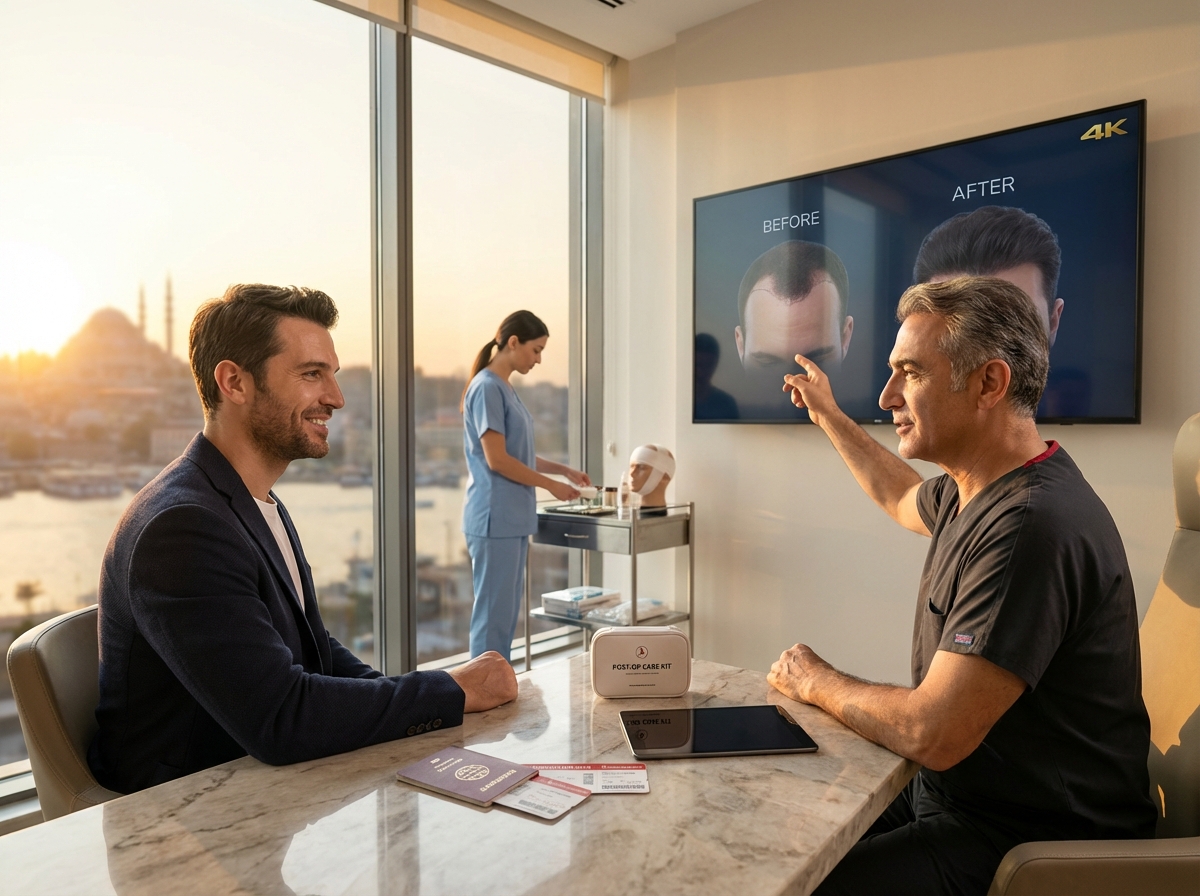
Thinking of a FUE hair transplant abroad? Turkey has become the global leader for hair restoration, attracting medical tourists with competitive pricing, high-volume specialist clinics, and integrated travel packages. This article examines why Turkey dominates, what to expect during FUE procedures, how to evaluate clinics and surgeons, the risks to watch for, and practical recovery and travel planning for US patients.
Why Turkey Leads the FUE Market
The rise of Istanbul as a global center for hair restoration is the result of specific economic shifts and early medical specialization. Decades ago, Turkish doctors began focusing on Follicular Unit Extraction techniques before they became mainstream in many Western countries. This early start allowed the local medical community to refine the process and build a massive infrastructure. Today, the city is home to hundreds of clinics that do nothing but hair transplants. This hyper-specialized model creates a team environment where every person has a specific role. Some technicians only extract grafts. Others only sort them under microscopes. This level of repetition leads to a high degree of technical speed.
Economic forces play a massive role in why Turkey stays at the top. The cost of living and labor in Turkey is much lower than in the United States. This allows clinics to offer prices that seem impossible to American patients. In the US, a high-quality FUE procedure often costs between $10,000 and $20,000. These prices usually depend on the number of grafts and the reputation of the surgeon. In Turkey, the same procedure is often sold as a flat-rate package. These packages commonly range from $2,500 to $6,500. This price difference is a primary reason why thousands of Americans are flying to Turkey for hair transplants in 2025.
The currency exchange rate provides another advantage for international travelers. The strength of the US dollar against the Turkish lira means that even luxury services become affordable. Turkish clinics have used this to create an all-inclusive tourism model. A typical package does not just cover the surgery. It includes a stay in a four or five-star hotel. It covers private airport transfers in VIP vans. Most clinics provide a personal translator to help with communication. This integrated approach removes the stress of planning a medical trip abroad. It makes the process feel more like a vacation than a surgery.
| Comparison Factor | United States Market | Turkey Market |
|---|---|---|
| Average Package Cost | $10,000 to $20,000 | $2,500 to $6,500 |
| Pricing Model | Per graft or per session | All-inclusive flat rate |
| Inclusions | Procedure only | Hotel, transfers, and meds |
| Annual Volume | Moderate | Over 1 million patients |
The scale of the industry in Turkey has positive and negative effects. On the positive side, the sheer volume of cases means that top surgeons have seen every possible hair type and loss pattern. This experience leads to better efficiency. However, the high demand has also led to the rise of marketing-driven clinics often called graft mills. These facilities prioritize volume over patient safety. They might perform twenty or thirty operations in a single day. In these settings, the actual surgeon may only spend a few minutes with the patient. The rest of the work is left to technicians who may have varying levels of training. This variability in quality is the biggest risk for medical tourists.
Regulatory oversight is a key factor for patients to consider. The Turkish Ministry of Health sets strict rules for clinics. Facilities must meet specific hygiene and equipment standards to operate legally. Many top-tier clinics go beyond local rules by seeking international credentials. Joint Commission International accreditation is a major marker of quality. It shows that a clinic follows the same safety protocols as a US hospital. Patients should also look for surgeons who are members of the International Society of Hair Restoration Surgery. This membership indicates a commitment to ethical standards and continuing education.
According to hair transplant statistics, FUE is now the most common method worldwide. Turkey has mastered the delivery of this method at scale. For a US patient, the decision to travel often comes down to a balance of cost and convenience. Staying local offers the benefit of easy follow-up appointments and legal recourse if something goes wrong. Traveling to Turkey offers massive savings and access to highly experienced teams. A hair transplant cost in Turkey vs USA full comparison shows that even with airfare, the savings can exceed $10,000.
Patients must do deep research to avoid low-quality providers. It is vital to ask who will perform the actual incisions. A reputable clinic will be transparent about the role of the doctor versus the technicians. They will provide a written estimate of the graft count and show time-stamped photos of previous work. While the low prices are attractive, the primary goal should be a safe and natural result. The dominance of Turkey in this market is built on a foundation of genuine expertise, but the responsibility of finding that expertise rests with the patient. Choosing a clinic based only on the lowest price is often a mistake. The best outcomes come from facilities that balance the efficiency of the Turkish model with the medical standards expected in the West.
Understanding FUE Procedures and What to Expect in Turkey
Follicular Unit Extraction or FUE is the primary method for hair restoration in Turkish clinics. It involves removing individual hair follicles from a donor area and placing them into thinning spots. This technique has replaced older methods because it does not leave a long linear scar. In Istanbul, you will find several variations of this procedure tailored to different needs.
Manual and Motorized FUE
Manual FUE uses a hand tool to extract each graft. It offers high precision but is very slow. Most clinics in Turkey use motorized FUE. This uses a small rotating punch to speed up the process. It allows teams to harvest thousands of grafts in a single day. The main benefit is the ability to cover large areas of baldness in one session. However, if the technician is not careful, the heat from the motor can damage the follicles.
Sapphire FUE and DHI Approaches
Sapphire FUE is a common upgrade in Turkish packages. Instead of steel blades, surgeons use tips made from synthetic sapphire. These blades are much sharper and smoother. They create smaller V-shaped incisions. This results in less tissue trauma and faster healing. DHI or Direct Hair Implantation uses a Choi pen tool. This tool extracts and implants the hair almost simultaneously. It eliminates the need to open channels beforehand. DHI is often better for adding density between existing hairs or creating a natural hairline. It is generally more expensive because it requires more time and specialized staff. You can find more details in this FUE vs DHI Hair Transplant in Turkey 2025 comparison.
Female Hair Restoration
Women are also excellent candidates for hair restoration in Turkey, with outcomes very similar to those seen in men. Many women prefer unshaven DHI to avoid cutting their existing hair short, allowing for a more discreet recovery. Success depends heavily on the type of hair loss, so a thorough blood test is often recommended before booking to ensure thinning is not caused by underlying medical issues.
Preoperative Assessment and Planning
The process starts long before you arrive. Clinics require high resolution photos to measure donor density. They also review your medical history to ensure you are a good candidate. Patients with moderate thinning often need 2,000 to 3,000 grafts, while those with extensive baldness might require 4,000 to 6,000 grafts. You should receive a written estimate of the follicular units needed based on your specific classification. I recommend requesting a documented graft count and photos of the harvested grafts during your surgery. This ensures you receive exactly what you paid for. Most Turkish packages are all inclusive. They cover your hotel stay, airport transfers, and the initial post operative check. They also provide the necessary medications for your first few days home.
The Procedure Day and Pain Expectations
A typical session lasts four to eight hours depending on the number of grafts. You will receive local anesthesia, so you will not feel pain during the extraction or implantation. You might feel some pressure as the numbing wears off, but most patients only need mild over-the-counter pain relief during the first two nights. Some clinics offer oral sedation to help you stay relaxed. The workflow is highly efficient. One team of technicians focuses on extraction. Another team prepares the grafts. A third team handles the implantation. This division of labor is why Turkish clinics can handle high volumes while maintaining speed. You should expect to spend the entire day at the clinic with a short break for lunch.
| Phase | Timeline | What to Expect |
|---|---|---|
| Initial Recovery | 24 to 72 Hours | Dressing removal and first gentle wash at the clinic. |
| Shedding Phase | 2 to 8 Weeks | Temporary loss of transplanted hairs known as telogen shedding. |
| Early Regrowth | 3 to 6 Months | Fine new hairs begin to appear on the scalp surface. |
| Visible Density | 9 to 12 Months | Hair thickens and the final hairline shape becomes clear. |
| Final Maturation | 12 to 18 Months | The hair reaches its full texture and permanent density. |
Post Operative Care and Long-Term Results
Clinics often suggest adjunct treatments to improve results. PRP or Platelet Rich Plasma is a common addition. It involves injecting your own plasma into the scalp to support graft survival. You might also receive recommendations for vitamins or topical minoxidil. These help maintain your existing hair and speed up the growth of new follicles. Following the clinic instructions for the first wash is critical. You must be very gentle to avoid dislodging the new grafts. Regarding permanence, the hair follicles taken from the back of the head are genetically resistant to balding. These grafts continue to grow for a lifetime in their new location, provided you maintain a healthy lifestyle.
Practical Advice for US Travelers
Planning your trip requires careful timing. I suggest staying in Turkey for 4 to 10 days. This allows enough time for the initial healing and the first professional wash. Most surgeons recommend waiting at least 48 to 72 hours before boarding a long flight to allow initial swelling to subside and ensure grafts have started to take hold. Long flights can cause significant swelling, so it is better to wait a few extra days if your schedule allows. Once you return to the US, you will need to coordinate remote follow up with the clinic. It is also wise to have a local physician available for any immediate concerns. Preparing your home with the right shampoos and a neck pillow will make the first week much easier.
Assessing Quality Risks and Choosing the Right Clinic and Surgeon
FUE hair restoration involves real surgical risks that require serious attention. Infection can occur if the clinic does not maintain a sterile environment. Poor graft survival is another major concern where the transplanted hair fails to grow. Overharvesting happens when a surgeon takes too many follicles from the back of the head. This leads to donor depletion and leaves the hair looking thin or patchy. Unnatural hairline design is a common mistake in low quality clinics. It makes the transplant look obvious. Uneven density creates a strange appearance under bright lights. Some patients experience cysts or a temporary loss of their original hair known as shock loss. Scarring is usually small in FUE—tiny circular scars less than one millimeter in diameter—but it can be visible if the technique is poor. Anesthesia complications are rare but they remain a possibility in any surgery.
Identifying Red Flags in Turkish Clinics
Suspicious Pricing and Lack of Detail
Very low prices that come without clinical details are a warning sign. High quality medical care has fixed costs. If a price seems too good to be true it likely involves cutting corners. You should be wary of clinics that refuse to provide surgeon credentials. Every patient deserves to know who is performing the procedure. Lack of time stamped before and after galleries is another red flag. Unverifiable testimonials do not provide proof of skill. You should never feel pressure to pay full fees up front without a signed contract. A clinic that has no explicit complication or revision policy is not prioritizing your safety. Staff members who minimize your questions or rush your consultation are not reliable partners for your health.
Verification Steps for US Patients
Professional Credentials and Documentation
You must confirm the surgeon is registered with the Turkish medical authorities. This is a basic requirement for legal practice. Look for memberships in international organizations like the ISHRS. These affiliations show a commitment to global standards. Request operation photos and videos that include timestamps. You need permission from the clinic to see these. Ask for a documented graft count before the surgery begins. A clear postoperative plan should be provided in writing. You need to know exactly what follow up care is included in your package. Ask the clinic how they handle complications for patients who have already returned to the United States. Many Americans are flying to Turkey for hair transplants in 2025 because of the high volume of successful cases but verification remains your responsibility.
Evaluating Facilities and Reviews
Accreditation and Feedback Patterns
Facility credentials are a vital part of your research. Look for JCI accreditation or national Turkish health certifications. These labels mean the building meets specific safety and hygiene rules. When you read online reviews you must look for patterns. Do not focus on a single positive or negative anecdote. Look for recurring comments about the surgeon’s involvement or the cleanliness of the rooms. If many people mention the same problem it is likely a real issue. You should also find an independent physician in your home city for postoperative care. Having a local doctor to monitor your progress adds a layer of safety when you return from abroad. They can spot early signs of infection or poor healing that you might miss.
Legal and Practical Realities
Jurisdiction and Insurance Needs
Foreign patients face specific legal limitations. You will have limited legal recourse if something goes wrong in another country. Jurisdictional challenges make it hard to file a lawsuit abroad. This is why travel and medical insurance are necessary. You should choose a policy that covers medical complications specifically. Look for options that include emergency repatriation if you need to return home for urgent care. Understanding these risks helps you prepare for the worst while hoping for the best. The cost of a hair transplant in Turkey vs the USA is much lower but you must factor in these extra safety expenses.
Negotiation and Quote Comparison
Calculating Effective Costs
When you compare quotes you should look at the effective cost per graft. Do not just look at the headline price for the whole package. Use the clinic’s documented graft estimate to find the real value. Ask if PRP treatments and medications are included in the price. Some clinics add these as extra fees later. You should also check if post-op washes and hotel transfers are part of the deal. Request a written treatment plan before you send any money. This document should include the FUE vs DHI technique comparison and the specific tools the surgeon will use. Having a written complication policy protects you from unexpected costs if you need a touch up later. Comparing these details ensures you choose a clinic based on quality rather than just the lowest price.
Actionable Patient Checklist
Research top clinics and surgeons
Do not start your search on social media alone. Use independent forums and medical databases to find clinics with long track records. Look for facilities that hold JCI accreditation or are recognized by the Turkish Ministry of Health. You want to find a surgeon who is a member of the ISHRS. This organization sets high standards for ethics and technique. Avoid clinics that refuse to name the lead surgeon who will oversee your case. Many “graft mills” use technicians for the entire process, but you should insist on a doctor performing the critical steps of the surgery.
Schedule multiple teleconsultations
Never book a flight based on a single email exchange. Arrange video calls with at least three different providers. This allows you to gauge their communication skills and their level of transparency. Ask specific questions about their graft survival rates and their experience with your specific hair type. A reputable clinic will provide a realistic assessment rather than promising a full head of hair regardless of your donor area density. You can learn more about why so many people are making this trip in this article about Why Thousands of Americans Are Flying to Turkey for Hair ….
Verify credentials and request time-stamped examples
Ask for before and after photos that include timestamps or consistent backgrounds. This helps ensure the photos belong to that specific clinic and are not stock images. You should also verify the surgeon’s registration with Turkish medical authorities. If a clinic is hesitant to provide proof of their licenses, walk away. Your safety depends on the legitimacy of the medical staff.
Compare graft counts and total package details
Turkish clinics often offer all-inclusive packages. These usually include airport transfers, luxury hotel stays, and post-operative medications. Ensure you get a written estimate of the graft count. Some clinics might promise five thousand grafts but only deliver three thousand. Compare the per-graft cost to understand the true value. You should also check if the package includes advanced techniques like Sapphire FUE or DHI. You can compare these methods in this guide on FUE vs DHI Hair Transplant in Turkey 2025 – Technique Compar.
Plan for a sufficient stay in Turkey
While some clinics suggest a three day trip, you should plan for four to seven days. This extra time allows for a proper follow-up appointment and the first professional hair wash. It also provides a buffer in case you experience minor complications like excessive swelling or bleeding. Flying too soon after surgery can increase the risk of graft displacement due to cabin pressure changes.
Secure specialized travel and medical insurance
Standard travel insurance rarely covers complications from elective surgery. Look for medical tourism insurance policies that specifically include coverage for complications abroad and emergency repatriation. This is a small investment that provides significant peace of mind when you are thousands of miles from home.
Arrange local follow-up with a US physician
Before you leave, talk to a local dermatologist or hair restoration expert. You need someone in the US who is willing to monitor your progress and handle any issues that arise after you return. Having a local point of contact ensures continuity of care and helps you manage the long term health of your scalp.
Set realistic expectations for the timeline
Understand that your hair will likely fall out in the first two months. This is called telogen shedding and it is a normal part of the process. Visible growth usually starts between three and six months. You will not see the final mature result until twelve to eighteen months after the procedure. Patience is a requirement for a successful transplant.
Prepare documentation for continuity of care
Request a full operative report before you leave the clinic. This document should include the number of grafts extracted, the solution used to preserve them, and the specific medications administered. Keep this in your permanent medical records. It will be vital if you ever need a touch-up or a second procedure in the future.
Prioritize your safety and the long term health of your donor area over finding the absolute lowest price. A bargain is not worth a scarred scalp or a depleted donor zone that cannot be fixed. Use this checklist as your standard when requesting quotes and conducting consultations to ensure you make a choice based on quality and transparency.
Sources
- FUE vs DHI Hair Transplant in Turkey 2025 – Technique Compar — Compare FUE and DHI hair transplant techniques in Turkey. Learn the key differences, recovery times, graft survival rates, …
- Why Thousands of Americans Are Flying to Turkey for Hair … — Turkey's exploding as the 2025 hotspot for hair transplants, pulling in over a million international patients with costs 70–80% below US …
- Turkey Hair Transplant Cost 2025: Prices and Comparisons – Hims — According to findings from Statista, the average price of a hair transplant in Turkey in 2021 (the most recent data available) was $2,676.
- Hair Transplant Cost in Turkey vs USA:Full Comparison — According to multiple reports,a high-quality hair transplant package in Turkey typically ranges from $3,500 to $6,500 a clinic;. A real-world example from a …
- Hair Transplant Statistics 2025 (Costs, number per country…) — Hair Transplant Statistics (2025) ; Hair Transplants Turkey, 1.05 million (2021) ; Global market value, 9.5 billion USD (2021) ; Most common method, FUE (66%).
- Hair Transplant Statistics (Updated 2025) – Wimpole Clinic — 66.2% of hair transplant surgeries are FUE, 31.5% are FUT, and 2.35% use both techniques. Learn more about the difference between FUE & FUT. 87.3% of hair …
Legal Disclaimers & Brand Notices
The information provided in this article is for educational and informational purposes only and does not constitute professional medical advice, diagnosis, or treatment. Surgical procedures, including FUE and DHI hair restoration, involve inherent medical risks such as infection, scarring, and anesthesia complications. Always seek the advice of a qualified physician or other healthcare provider with any questions you may have regarding a medical condition or specific procedure.
All product names, logos, and brands mentioned in this content are the property of their respective owners. All company, product, and service names used in this article are for identification purposes only. Use of these names, logos, and brands does not imply endorsement, affiliation, or certification by the trademark holders.