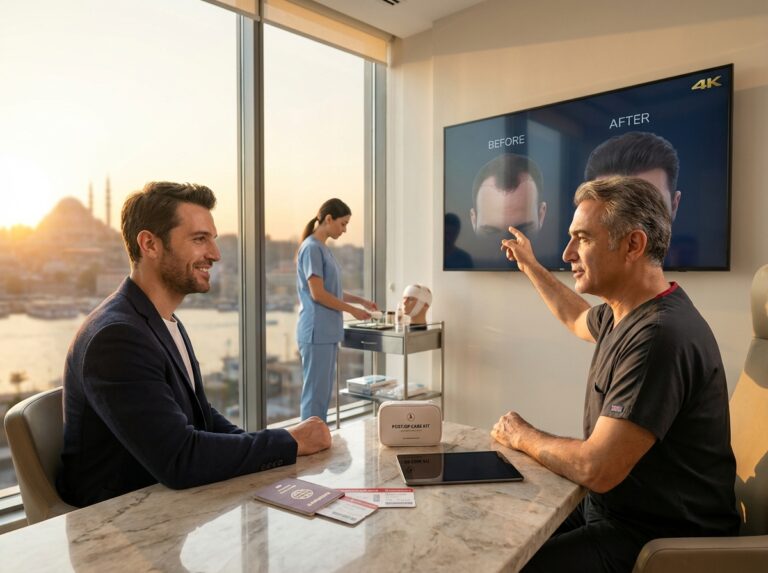
Considering a mommy makeover abroad? This guide explains which procedures are commonly combined, how to evaluate clinics and surgeons, cost and safety tradeoffs, and how to plan travel and recovery. Read on for practical checklists and risk-management strategies to help you plan a safe, confident plastic surgery trip outside the United States.
What a Mommy Makeover Typically Includes
A mommy makeover is a personalized set of surgeries designed to address the physical changes that happen after pregnancy and breastfeeding. It usually targets the midsection and the breasts because these areas often see the most significant shifts in skin elasticity and volume. Instead of one fixed operation, it is a flexible plan that surgeons adapt to each person’s specific needs.
The Core Components of the Surgery
The foundation of most plans includes an abdominoplasty, commonly known as a tummy tuck. A full tummy tuck involves removing excess skin and tightening the abdominal muscles that may have separated during pregnancy (diastasis recti). If the skin laxity is strictly below the belly button, a mini tummy tuck might be sufficient. This shorter version takes about two to three hours. Liposuction is frequently added to remove stubborn fat deposits in the flanks or hips, helping create a smoother transition between the treated areas. In 2024, liposuction was the most performed procedure globally, and it remains a staple in combined surgeries abroad.
Breast procedures are the second major part of the makeover. Some women experience a loss of volume and choose breast augmentation with implants. Others deal with sagging, known as ptosis, and require a mastopexy or breast lift to reposition the tissue. It is common to combine these two for a “lift and fill” effect. For those who find their breasts have become uncomfortably large or heavy after having children, a breast reduction is an option. Surgeons usually recommend waiting at least six months after you stop breastfeeding before scheduling these procedures to ensure the breast tissue has stabilized.
Additional Options and Customization
Some patients choose to add smaller procedures to their surgical plan. Labiaplasty has become a popular addition for those looking to address changes in the vaginal area; it is a relatively quick procedure that takes about an hour. Nonsurgical treatments like skin resurfacing or injectables can also be included to address skin texture or facial aging. Many clinics in destinations like Mexico or Turkey offer these as part of a comprehensive package.
How Surgeons Plan the Sequence
Combining surgeries into one session means you only go under general anesthesia once. This approach can save about 30 percent in costs compared to doing them separately. A typical full mommy makeover takes between four and eight hours. Surgeons often start with liposuction to contour the body before moving to the tummy tuck and finishing with the breast work. However, safety is paramount. If a patient has a BMI over 30, diabetes, or other health concerns, the surgeon might suggest a staged approach. This means doing the breast surgery first and waiting roughly six months for the tummy tuck. Staging significantly reduces the risk of complications like blood clots or wound healing issues in higher-risk candidates.
Understanding the Recovery and Complexity
The more procedures you combine, the more complex the recovery becomes. Most patients can return to light activities within two to three weeks, but full results usually take three to six months to appear. You will likely need to wear compression garments for four to six weeks to manage swelling. Drains are common in tummy tucks and are typically removed within 7 to 10 days, depending on fluid output. If you are traveling abroad, you must stay in the destination for at least 10 to 14 days before flying home to minimize the risk of deep vein thrombosis and ensure drains are safely removed.
| Procedure | Typical Time | Anesthesia Type |
|---|---|---|
| Full Tummy Tuck | 3 to 5 hours | General |
| Mini Tummy Tuck | 2 to 3 hours | General or Local |
| Breast Augmentation | 1 to 2 hours | General |
| Labiaplasty | 1 hour | Local or General |
Patient Profiles and Realistic Goals
Consider a 35-year-old woman with two children who has reached her goal weight but has loose skin and deflated breasts. Her plan might include a full tummy tuck with muscle repair and a breast lift with implants. Another example is a 42-year-old woman with three children who primarily wants to address fat pockets and sagging breasts. She might opt for extensive liposuction and a breast reduction. These combinations are based on body type and how the skin has responded to weight changes. According to recent data on Mommy Makeover Satisfaction Rates, up to 98 percent of patients are thrilled with their results when the plan is tailored correctly.
Questions to Ask Your Surgeon
When reviewing quotes from international clinics, you need to know exactly what is included. Some prices might look low because they exclude essential items. Use this list to get clarity during your virtual consultation:
- Does the quote include the fees for the anesthesiologist and the surgical facility?
- Are the postoperative compression garments and surgical drains provided?
- How many follow-up visits are included in the package price?
- What is the specific plan if a complication occurs while I am still in the country?
- Will I receive a detailed list of the implant brands and serial numbers used?
- Is the surgical facility attached to a full-service hospital with an ICU?
The cost for these packages varies widely. In the United States, you might pay between $15,000 and $40,000. In contrast, clinics in Mexico or Colombia often offer similar packages for $7,000 to $12,000. While the savings are significant, the focus should always be on the surgeon’s expertise and the clinic’s accreditation.
Selecting the Best Destination and Clinic
Choosing the right location for a mommy makeover involves more than just looking at the lowest price tag. While the demand for these procedures remains high in cities like New York and Miami, many patients now look toward international hubs to find a balance of expertise and value. Each destination has developed a specific reputation in the medical tourism market as of late 2025.
Popular Destinations and Their Strengths
Mexico remains the primary choice for North American patients due to its proximity. Tijuana and Cancun offer savings of 50 to 70 percent compared to US prices. Turkey has become a global leader for all-inclusive packages, where JCI-accredited clinics in Istanbul provide high-tech facilities at costs often 60 to 80 percent lower than in the States. Thailand and South Korea are recognized for their advanced surgical techniques, particularly in breast augmentation and intricate body contouring. Colombia and Brazil are often called the world capitals of plastic surgery, with surgeons there performing millions of procedures annually. These South American hubs are known for a specific aesthetic focus on dramatic curves. Costa Rica and the Dominican Republic attract patients with a mix of English-speaking staff and resort-style recovery environments that simplify the logistics for international travelers.
Verifying Accreditation and Credentials
You cannot rely on a clinic’s website alone. Verification must be done through independent bodies. The Joint Commission International (JCI) is the gold standard for hospital safety and quality. You can search their official database to confirm a facility’s current standing. For surgeons, membership in the International Society of Aesthetic Plastic Surgery (ISAPS) is a critical indicator. This organization requires members to be board-certified in their home country and maintain high ethical standards. In Costa Rica, you should check the national medical board (CAA) records. In Brazil, the SBCP (Sociedade Brasileira de Cirurgia Plástica) is the relevant authority. Always request the surgeon’s full registration number and verify it on the official government or medical board portal of that country before paying a deposit.
Cost Comparison Framework
When you receive a quote, you must look at what is excluded. A quote under $5,000 for a full mommy makeover is a major red flag in 2025. It often indicates that anesthesia fees, facility costs, or post-operative garments are not included. While mommy makeover costs in 2025 vary, a realistic international budget should include the following items.
| Destination | Average Package Cost | Estimated Savings vs US |
|---|---|---|
| Mexico | $7,000 – $12,000 | 60% |
| Turkey | $6,500 – $10,000 | 70% |
| Thailand | $8,000 – $11,000 | 65% |
| Colombia | $7,500 – $9,500 | 65% |
Budgeting must also account for flights, which can range from $500 to $2,500. Accommodation for the mandatory 14-day stay, medications, and a contingency fund of at least $5,000 for potential complications are essential. Most US health insurance plans cover zero percent of complications arising from elective surgery abroad.
Communication and Telemedicine
Responsiveness is your first test of a clinic’s professionalism. In 2025, most top-tier international clinics offer virtual consults via encrypted video platforms. During these sessions, assess the surgeon’s ability to explain the procedure in clear English. Request unedited before and after galleries that show patients with a similar body type to yours—look for consistent lighting and multiple angles. Ask for references from recent US-based patients. If a clinic pressures you to book immediately or offers “limited time” discounts, it is best to look elsewhere. Informed consent documents should be provided in English well before your travel date so you can review the risks without the pressure of being in a foreign office.
Travel and Legal Considerations
Visa requirements vary. US citizens can stay in Mexico for up to 180 days without a visa, while Turkey requires an e-visa that usually takes 10 to 15 days to process. Legally, you must understand that malpractice enforcement is extremely difficult overseas. Most foreign jurisdictions do not have the same litigation structure as the US. If a surgical error occurs, your primary recourse is often limited to what the clinic’s internal policy offers. This reality makes choosing an accredited facility even more vital. Purchasing specialized medical tourism insurance that covers complications and emergency evacuations is a non-negotiable step for a confident trip.
Pre-Departure Checklist
- Confirm JCI accreditation of the hospital and ISAPS membership of the surgeon.
- Verify passport validity for at least six months beyond your return date.
- Secure medical tourism insurance with complication and medevac coverage (typically $200–$500).
- Arrange for a companion to stay with you for the first seven to ten days.
- Prepare a folder with physical copies of your medical records and prescriptions.
- Collect medical records from the last two years, including any history of surgeries or chronic conditions.
Safety Risks and How to Reduce Complications
Combining several surgeries into one session is the core of a mommy makeover. It saves money and reduces total downtime, but it also keeps you under general anesthesia for four to eight hours. This length of time changes the safety profile. When you stay under that long, your body faces more stress. Bleeding risks can double if the surgery goes over five hours. This is why some surgeons suggest staging. Staging means doing the breast work first and the tummy tuck six months later. It is often safer for patients with a higher BMI.
Infection is another factor to watch. In accredited US facilities, infection rates stay around one to two percent. Abroad, this can rise to five percent depending on the clinic. Seromas are common; these are fluid pockets that form under the skin and happen in about fifteen percent of combined cases. If a seroma gets large, it needs draining. Doing this while you are in a different country is difficult, and it is even harder if you have already returned home.
Blood clots are the biggest worry for medical tourists. Deep vein thrombosis (DVT) happens more often when you combine procedures. The risk is two to three times higher than a single surgery. If you add a long flight shortly after, the danger grows. This is why most surgeons insist you stay in the country for at least 10 to 14 days. Flying too soon can be fatal.
Nonmedical risks exist. Language barriers can lead to small misunderstandings about your medical history. Standards of care vary by region. You might find that the nursing staff to patient ratio is different than what you expect. Malpractice laws are also very different. Only about twenty percent of US insurance plans cover complications that happen in another country. If something goes wrong, you might have to pay for the fix yourself.
Medical Preparation and Safety Protocols
Preparation starts months before you leave. You should stabilize your weight first; a BMI between 20 and 28 is the sweet spot for healing. You must stop smoking at least four to six weeks before your date. Smoking cuts off oxygen to your skin and makes wound healing problems fifty percent more likely. You will need lab tests like a complete blood count (CBC), coagulation panel, and an EKG if you are over forty or have a history of cardiac issues.
Ask the clinic about their safety protocols. You want to know if they have an on-site ICU and if they have type-specific blood available. Ask about the anesthesia team; you want a board-certified anesthesiologist who specializes in long surgeries. They should use compression stockings and heparin during the surgery to prevent clots.
Monitoring after surgery is vital. The first 48 hours are the most important. Your vital signs should be checked every four hours. Look for red flags like a fever over 101 degrees or sudden, heavy swelling in one leg. If you feel short of breath, it could be a pulmonary embolism. This is an emergency.
| Risk Factor | US Rate | Abroad Average |
|---|---|---|
| Infection | 1 to 2 percent | 2 to 5 percent |
| Seroma | 10 percent | 15 percent |
| DVT | 0.5 percent | 1 to 1.5 percent |
The mommy makeover satisfaction rate is high, reaching 98 percent when everything goes right. However, you must be proactive. Choosing a local surgeon is better if you have complex health issues. If you have a history of blood clots, staying close to home is the right move. Local care allows for easy follow-up visits. If a drain needs to stay in longer, your local doctor can handle it. If you choose to go abroad, you must accept the trade: you get a lower price, but you take on more logistical risk. Review the latest Cosmetic Surgery Statistics to understand the landscape before you book. Safety should always come before savings.
Planning Travel, Recovery, and Follow-Up
Planning the logistics of a surgery trip requires more than just booking a flight. You need a solid strategy for the weeks following your procedure. A mommy makeover involves multiple surgical sites, meaning your body faces a significant recovery burden. You should prepare for a timeline that spans several months. Most patients see the first major milestones within the first few weeks, but the final results often take a full year to appear.
Recovery Milestones and Expectations
The First 48 to 72 Hours
This is the most challenging phase. You will experience peak swelling and discomfort. If you had a tummy tuck, you might find it hard to stand up straight. Your surgeon will encourage short walks around the room to keep blood flowing. Pain management is the priority during these initial days.
The First Two Weeks
By day ten, most drains are usually removed. You can start moving more freely but you will still feel tired. Many women return to very light activities or desk work if they work from home. You must continue wearing your compression garments 24 hours a day.
Four to Six Weeks
The initial bruising should fade. You can often resume driving and light exercise like walking. You must still avoid heavy lifting or high-impact workouts. This is a critical time for wound healing. Any strain on the incisions can cause scars to widen.
Three to Twelve Months
Residual swelling gradually disappears. Your final contours become visible around the six-month mark. Scars will continue to fade from red to a pale skin tone. The satisfaction rate is very high at this stage as the body settles into its new shape.
Travel Timing and Safety
Flying too soon after surgery is a major health risk. The risk of deep vein thrombosis increases significantly after long procedures. You should wait a minimum of 10 to 14 days before flying home. This window allows your body to stabilize and ensures you are past the highest risk period for immediate complications like hematomas. If you had an extensive tummy tuck, some surgeons recommend waiting 21 days. During your flight, wear compression stockings, walk for five minutes every hour, and stay hydrated. Your surgeon may prescribe heparin or other blood thinners for the journey home.
| Procedure Combination | Minimum Stay (Days) | Reason |
|---|---|---|
| Tummy Tuck and Liposuction | 10 to 14 | Drain management |
| Breast Lift and Tummy Tuck | 12 to 14 | Wound monitoring |
| Full Mommy Makeover | 14 to 21 | DVT prevention |
Accommodation and Caregiver Planning
You cannot recover alone in a hotel room. You need a responsible companion for at least the first seven days. They will help you with medication, meals, and moving to the bathroom. Many international clinics offer recovery facilities. These suites often cost around $100 per night and provide specialized beds and nursing staff. If you choose a hotel, ensure it is close to the clinic. Your packing list should include loose clothing, extra dressings, and two sets of compression garments.
Medication and Follow-Up Care
Managing prescriptions across borders requires attention to detail. You will likely receive a 10-day supply of pain relief and antibiotics. You must finish the entire course of antibiotics to prevent infection. Check the regulations for bringing these medications back into your home country. Before you leave the clinic, get clear written discharge instructions in English and an emergency contact number that is monitored 24 hours a day.
Once you return home, arrange for telemedicine checkups. You will need to send high-quality photographs to your surgeon every week for the first month. Find a local plastic surgeon who agrees to see you before you book your trip, as many US doctors are hesitant to treat patients who had surgery elsewhere. Minor revisions or nonsurgical treatments are better handled locally, as traveling abroad for a small scar touch-up is rarely cost-effective.
Insurance and Documentation
Standard health insurance rarely covers complications from elective surgery abroad. You should purchase specialized medical tourism insurance. This often costs between $200 and $500 and can cover the cost of medical evacuation, which can exceed $100,000. Keep a detailed log of all your appointments and expenses. Take photos of your progress every few days. This documentation is essential if you need to make a legal or insurance claim later.
Recovery Planning Guide
| Phase | Action Item | Goal |
|---|---|---|
| Pre-Op | Book companion and insurance | Safety and support |
| Days 1-3 | Stay in clinic or recovery suite | Pain control |
| Days 4-10 | Short walks and rest | Prevent blood clots |
| Day 14 | Final check and fly home | Safe transit |
| Month 1 | Telemedicine follow up | Monitor healing |
| Month 6 | Final photo review | Assess results |
The total mommy makeover cost in 2025 should include these logistics. Budgeting for an extra week of stay and proper insurance is better than rushing home. Realistic expectations are vital for a successful outcome. Surgery can improve your contour significantly but it will not achieve perfection. Focus on your health and safety above all else. Choosing an accredited facility and a board-certified surgeon is the best way to ensure a positive experience. You have the power to make an informed choice that prioritizes your well-being.
Sources
- Tummy Tuck & Mommy Makeover Demand in North America — This blog is based on the 2025 AestheticMatch Research Study 3.0, titled: “Consumer Demand for Tummy Tuck and Mommy Makeover Procedures: A Multi …
- The Rise of 'Mommy Makeovers' in 2025 – Rosenberg — The demand for mommy makeovers continues to grow, with recent statistics showing a steady increase in cosmetic surgery procedures nationwide.
- How Much Does a Mommy Makeover Cost in 2025? | Long Beach — On average, patients can expect to pay between $15,000-$40,000+ for the entire procedure. This wide price range reflects the fact that every …
- Top Procedures Performed in the U.S. (2025) | Cape Cod Plastic … — Finally, combining multiple procedures—such as mommy makeovers integrating breast, tummy, and liposuction surgeries—has become a popular trend.
- Cosmetic Surgery Statistics: 2025 Reports and Data – CREO Clinic — In the U.S., 1,585,878 cosmetic surgical procedures were carried out in 2024, a 1% increase compared to 2023; this equates to 4.6 procedures per 1,000 people.
- Mommy Makeovers Popular Among Younger Women — Here are the statistics: women had nearly 112,000 tummy tucks in 2010, up 85% since 2000; 90,000 breast lifts, up 70% since 2000; and 296,000 …
- What is the Mommy Makeover Satisfaction Rate? — Combining several cosmetic procedures has a mommy makeover satisfaction rate, with up to 98% of patients being thrilled with their results.
- Mommy Makeover Trends & Data 2025: Procedures Demystified — This article demystifies the complex world of mommy makeovers, offering an insightful look at the types of procedures involved, current industry …
- What's on the horizon? Plastic surgery trends for 2025 | ASPS — ASPS statistics show a 5 percent increase in overall cosmetic surgery procedures between 2022 and 2023. There is no reason to believe that …
- The Growing Popularity of Mommy Makeover Procedures — Explore the increasing trend of mommy makeover procedures. Trust Kole Plastic Surgery for comprehensive treatments that restore your pre-pregnancy body.
Legal Disclaimers & Brand Notices
The content provided in this article is for informational purposes only and does not constitute medical advice, diagnosis, or treatment. Surgical procedures, including those discussed such as abdominoplasty, liposuction, and breast surgery, involve inherent risks including infection, scarring, and complications related to anesthesia or blood clots (DVT). Always seek the advice of your physician or another qualified health provider with any questions you may have regarding a medical condition or the suitability of a surgical procedure for your specific health profile. Never disregard professional medical advice or delay in seeking it because of something you have read in this guide.
All product names, logos, and brands mentioned in this text are the property of their respective owners. All company, product, and service names used in this website are for identification purposes only. Use of these names, logos, and brands does not imply endorsement or affiliation.