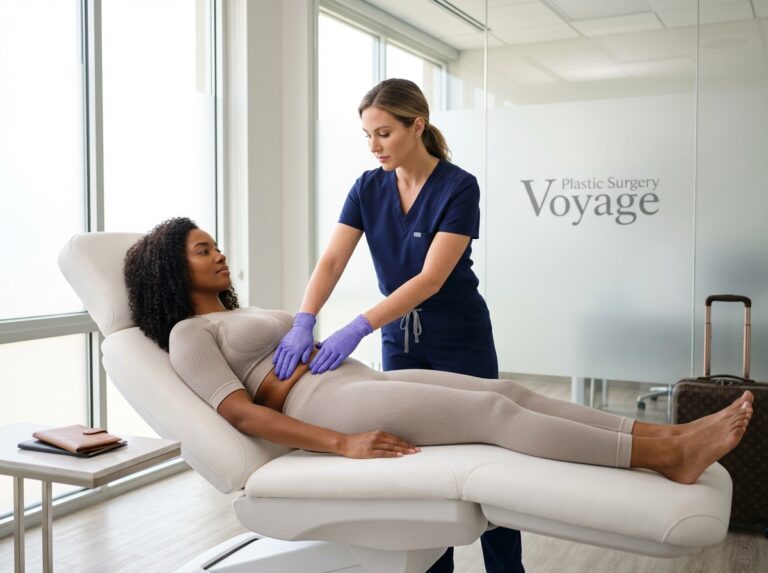
Proper sleeping position is one of the most important but often overlooked parts of recovery after a Brazilian Butt Lift (BBL) and tummy tuck. This guide explains why positioning matters, offers step‑by‑step sleep strategies for different recovery stages, covers combined procedures and travel implications, and gives practical tips for medical tourists planning plastic surgery abroad.
Why sleeping position matters after BBL and tummy tuck
After a BBL and tummy tuck, your body isn’t just healing; it’s undergoing a complex biological process. How you sleep directly influences the success of that process. It’s not just about comfort; it’s about protecting your investment and ensuring your body can repair itself effectively. The right position can make the difference between a smooth recovery and one filled with complications.
For a Brazilian Butt Lift, the primary concern is the survival of the newly transferred fat grafts. Think of these fat cells as delicate, living tissue transplanted to a new home. In the first few weeks, they are incredibly fragile and need to establish a new blood supply, a process called neovascularization. Direct pressure on your buttocks from lying on your back compresses these tiny, developing blood vessels, cutting off the oxygen and nutrients the fat cells need to survive. The result is a higher risk of fat necrosis, where the cells die off, and graft loss, where your body simply absorbs the dead tissue. This can lead to a loss of volume, asymmetry, and a less-than-ideal final result. Constant pressure also traps fluid and worsens swelling, which further slows down healing.
With an abdominoplasty, or tummy tuck, the main issue is tension on your incision line. During the procedure, your surgeon removes excess skin and tightens the abdominal muscles before pulling the remaining skin down taut. When you lie completely flat, you are stretching your torso to its maximum length. This puts significant strain on the fresh incision, pulling the edges apart. This tension is a major contributor to pain and increases the risk of serious complications like wound dehiscence, where the incision separates. Furthermore, the tension can create small pockets of space under the skin flap, inviting fluid to accumulate. This fluid collection, known as a seroma, is one of the most common issues after a tummy tuck and often requires drainage. Sleeping in a slightly flexed position, with your torso and knees bent, keeps the abdominal area relaxed and free from this dangerous tension.
Surgeons have specific timelines for these precautions, though the exact windows can vary. The first two weeks are almost universally considered the high-risk period, when BBL grafts are at their most vulnerable and tummy tuck incisions are at their weakest. After this initial phase, you enter a longer remodeling period that can last six to eight weeks or more. Tissues are stronger, but they are still healing and settling into their final shape. Your surgeon’s instructions are tailored to their specific surgical technique and your individual healing progress, so their guidance is paramount.
Beyond graft survival and incision tension, your sleeping position impacts a host of other recovery risks.
- Hematoma and Seroma
Improper positioning can increase the likelihood of blood (hematoma) or fluid (seroma) collecting beneath the skin. - Infection
Excessive tension or pressure on incisions can compromise blood flow to the skin edges, making them more susceptible to infection. - Delayed Scar Healing
Constant strain on an incision can lead to wider, thicker, or more discolored scars. A tension-free environment is crucial for fine-line scar formation. - Venous Thromboembolism (VTE)
This is a serious risk involving blood clots, often in the legs. While not directly caused by a sleeping position, prolonged immobility in any single position is a major risk factor. It is vital to be able to shift and move slightly, even while resting.
Ultimately, every piece of advice about your recovery sleep comes down to three core priorities. First, you must protect your incisions and your fat grafts from pressure and tension. Second, you need to position your body to help control swelling and minimize pain. Finally, you must maintain safe circulation by avoiding long periods of total stillness. Always confirm your specific sleeping plan with your operating surgeon, as they will provide the definitive instructions for your safe recovery.
Practical sleeping positions and tools for the first 0 to 6 weeks
The first six weeks of recovery are where your commitment truly pays off. Getting your sleep setup right is not just about comfort; it is about protecting your investment and ensuring a smooth healing process. This guide breaks down the essential positions and tools you will need, phase by phase.
Weeks 0–2 The Critical Foundation
This is the most restrictive period, where following instructions to the letter is non-negotiable.
For BBL Recovery Only
Your primary goal is to apply zero pressure to your buttocks. Your only approved sleeping positions are on your stomach or, with caution, your side. Sleeping on your back is absolutely forbidden during this time.
- Stomach Sleeping (Prone) This is the best position to protect your results. To do it safely, place one or two firm pillows under your hips and lower abdomen. This creates a gentle arch, lifting your buttocks completely off the mattress. A medium-firm mattress is ideal here; if your bed is too soft, your body will sink and may inadvertently put pressure on the grafts. For more tips on getting comfortable, this guide on how to sleep after a BBL offers some great visuals.
- Side Sleeping This is a potential alternative only if your surgeon did not transfer fat to your hips. To prevent rolling onto your back, hug a long body pillow in front of you and place another firm pillow between your knees. This helps stabilize your body and maintain proper spinal alignment.
For Tummy Tuck Recovery Only
You must keep your body in a flexed “V” shape to minimize tension on your abdominal incision. Sleeping flat is not an option.
- The Recliner Method Many find a comfortable recliner to be the easiest solution. Set it to a 30 to 45 degree angle, which is perfect for reducing strain. You can add a small pillow under your knees and another for lumbar support to enhance comfort.
- The Bed Method You can create a supportive nest in your bed without a recliner. Use a large wedge pillow or a stack of three to four firm pillows to elevate your torso. Place another pillow or a rolled blanket under your knees to keep them bent. This setup mimics the position of a hospital bed.
Weeks 2–6 Making Gradual Adjustments
During this phase, you can begin to introduce small changes, but always with caution and your surgeon’s guidance.
For BBL Recovery
Continue with stomach sleeping as your main position. You can explore side sleeping more confidently now, always using pillows to buffer your hips and prevent any direct weight-bearing. Most surgeons advise avoiding direct pressure on the buttocks for at least six weeks to maximize fat survival.
For Tummy Tuck Recovery
You can start to slowly lower your angle of elevation. A good approach is to remove one pillow from your stack each week, gradually working your way toward lying flat. If you feel any pulling or discomfort at your incision site, go back to a higher elevation for a few more days before trying again. Keep your knees slightly propped up.
Transitioning to Normal Sleep After 6 Weeks
Once your surgeon gives you the all-clear, usually around the six to eight-week mark, you can begin reintroducing your old sleeping positions. For BBL patients, the fat grafts are now more secure. For tummy tuck patients, the incision has healed significantly. Start with short intervals on your back and listen to your body. Any pain is a signal to return to a modified position.
Managing Comfort, Safety, and Recovery Gear
Pain Medication and Sleep Aids
Stay on top of your prescribed pain medication schedule, especially before bed. Taking a dose about 30 minutes before you lie down can make a huge difference. If you are thinking about using a sleep aid like melatonin, clear it with your surgeon first. It is critical that you never mix pain medication with alcohol or other sedatives, as this can dangerously suppress your breathing.
Drains and Compression Garments
Your compression garment is your best friend for controlling swelling and must be worn as directed. If you have surgical drains, carefully pin the tubing to your garment to prevent it from catching or pulling as you sleep. You may need to slightly adjust your position to ensure the drains can function properly by gravity.
Circulation and Breathing
Pay attention to your body. If any position makes you feel short of breath or causes numbness or tingling in your limbs, change it immediately. While rest is key, remember to gently flex your ankles and move your legs often to promote blood flow and reduce the risk of clots.
Sample Nightly Setups
- BBL Stomach Sleeper A medium-firm mattress with two firm pillows under the pelvis to elevate the buttocks. A thin pillow for the head. A body pillow placed alongside you to act as a barrier against rolling over.
- Tummy Tuck Bed Nest A large wedge pillow creating a 30-degree incline for your back. A softer pillow on top for your head. A firm pillow placed under your knees. A small, rolled towel for lumbar support.
- Tummy Tuck Recliner A recliner set to a comfortable 45-degree angle. A soft pillow or blanket under the knees to maintain a slight bend. A travel neck pillow to support your head and prevent a stiff neck.
Pre-Surgery Shopping Checklist for Medical Tourists
- Wedge Pillow Set: A set of these is non-negotiable for creating the 30-45 degree incline needed after a tummy tuck. An inflatable travel version can save luggage space.
- BBL Pillow: A firm foam cushion that goes under your thighs to lift your buttocks off any surface during brief, necessary sitting.
- Full-Length Body Pillow: Excellent for providing support and preventing you from accidentally rolling onto your stomach or back while side-sleeping.
- Knee and Lumbar Pillows: Smaller pillows to place under your knees to maintain a bend and behind your lower back for added support.
- Travel Neck Pillow: Useful for supporting your head and preventing a stiff neck, especially if sleeping in a recliner.
- Extra-long phone charging cable
- Slip-on footwear
- Compression socks for your flight
Managing combined BBL and tummy tuck procedures and special situations
Getting a tummy tuck and a Brazilian butt lift at the same time is a popular combination for mommy makeovers and medical tourists looking to maximize their trip. But it also creates a recovery puzzle. Your tummy tuck instructions say to sleep on your back in a flexed, semi-reclined position to protect your incision. Your BBL instructions strictly forbid sleeping on your back to protect the delicate, newly transferred fat grafts. This is the classic recovery conflict.
The solution is to find a safe compromise that protects both investments. Your two primary goals are always: 1) Keep tension off your abdominal incision, and 2) Keep all pressure off your buttocks. Here is a step-by-step framework for achieving this delicate balance.
The most recommended and safest position is a modified incline. Think of it as building a supportive throne. You will still sleep on your back, but with crucial adjustments to protect your BBL.
- Create the Incline: Use a large wedge pillow system or stack several firm bed pillows to elevate your upper body to a 30–45 degree angle. This creates the “bent” position needed for your tummy tuck, taking all the strain off your abdominal wall. An adjustable bed or a recliner is perfect for this.
- Support Your Knees: Place another pillow or a bolster under your knees to maintain a slight bend. This further reduces abdominal tension and is a standard part of tummy tuck recovery.
- Offload the Buttocks: This is the most critical step. You will use a special BBL pillow or a firm, donut-shaped cushion placed under your mid to upper thighs. Never place it directly under your buttocks. The goal is to elevate your thighs so that your buttocks are suspended in the air with zero contact with the mattress. This creates a pressure-free zone, allowing blood to flow freely to the fat grafts.
If you find the incline position impossible, a carefully controlled side-lying position may be an option, but only with your surgeon’s explicit approval. This is often discouraged if you had significant fat grafting to your hips. To do it safely, you’ll need a long body pillow to hug in front of you and a firm foam wedge pushed securely against your back. This setup acts as a barrier, preventing you from accidentally rolling onto your back or stomach.
Managing your recovery timeline involves gradually reintroducing pressure. For the first 2–3 weeks, sitting should be limited to the toilet, ideally with a raised toilet seat to minimize flexion. After that, your surgeon may clear you to sit for very short periods (5–10 minutes at a time) using your BBL pillow. Progressive weight-bearing is slow; expect to avoid sitting directly on your buttocks for at least 6 to 8 weeks.
Special situations require extra planning. If you have surgical drains from your tummy tuck, ensure the tubing is not kinked or compressed in your sleep setup and that the bulbs can hang freely to allow for proper drainage. For medical tourists facing a long flight home, you must use a BBL pillow on your seat to offload your buttocks and get up to walk the aisle every hour to prevent blood clots.
Your environment matters, too. A medium-firm mattress is ideal, as a mattress that is too soft will cause you to sink, defeating your careful pillow placement. Sleeping with a partner is often unrealistic in the first few weeks; it’s safer for you and more restful for them if you can sleep in a separate bed. Be realistic about your comfort. The first week will be challenging, and you will feel stiff and sore. The goal is safe positioning, not perfect comfort.
Most importantly, your surgeon’s written instructions are the final word. Before you travel, ensure you have a detailed post-operative plan, including diagrams for sleeping positions. Being far from your surgeon means you must be extra vigilant. Seek immediate local medical attention if you experience any of these red flags:
- Sudden shortness of breath or sharp chest pain.
- Pain, swelling, or redness in your calf, which could signal a blood clot (DVT).
- A fever over 101°F (38.3°C).
- Pain that gets worse instead of better and isn’t helped by your medication.
- Rapidly increasing swelling, spreading redness, or heat from an incision.
- Green or yellow, foul-smelling drainage from an incision site.
Your safety is the absolute priority.
Frequently Asked Questions
Navigating recovery can feel like a maze of questions. Here are direct answers to the most common concerns we hear from patients traveling for surgery. Remember, these are general guidelines; your surgeon’s instructions are the final word.
When can I sleep on my stomach after a BBL or tummy tuck?
This depends entirely on your procedure. For a BBL alone, stomach sleeping is mandatory for the first 2 to 6 weeks to protect the new fat grafts. For a tummy tuck alone, you must avoid stomach sleeping for at least 4 to 6 weeks, or until your surgeon clears you, to protect your incision line. If you had both, you cannot sleep on your stomach. You’ll need to use the modified side-lying or inclined back positions discussed earlier, always prioritizing the safety of your tummy tuck incision.
What if I need to sit on a long flight home?
This is a huge concern for medical tourists. You must avoid direct pressure on your buttocks. After the first 2 weeks, if your surgeon approves travel, you’ll need a special BBL pillow or donut cushion placed under your thighs, so your buttocks “float” above the seat. Limit sitting to short periods. For the flight, get up and walk the aisle for a few minutes every hour. To prevent dangerous blood clots (DVT), wear compression stockings, do ankle pumps in your seat, and stay very well hydrated.
How long should I avoid direct pressure on my buttocks after a BBL?
The rule is simple: no direct, prolonged pressure. The first 2 weeks are the most critical for fat graft survival, as the new fat cells are fragile and need to establish a blood supply. Sitting or lying on them can cut off this blood flow, causing the cells to die and compromising your results. Most surgeons recommend avoiding significant direct pressure for a full 6 to 8 weeks.
When can I finally sleep flat on my back again?
Patience is key here. After a tummy tuck, you’ll need to sleep in an inclined position for about 4 to 6 weeks to keep tension off your abdominal repair. Lying flat too soon can strain your incision. After a BBL, you must wait even longer, typically 6 to 8 weeks, before sleeping on your back is safe for the fat grafts. If you had both procedures, you’ll follow the longer 6 to 8 week timeline and get explicit clearance from your surgeon.
How do surgical drains change my sleep positions?
Drains, common with tummy tucks, don’t change the recommended positions, but they do require management. Your main goal is to prevent them from kinking, pulling, or getting clogged. The inclined back position often works best. You can pin the drain bulbs to your compression garment or a lanyard around your neck to keep them secure. Just make sure the tubing has some slack and the bulbs remain below the level of your incision to allow for proper gravity drainage.
Are recliners a good idea for recovery?
Absolutely. For tummy tuck patients, a recliner is one of the best recovery tools. It naturally holds you in the ideal “beach chair” position (torso elevated, knees bent), which minimizes tension on your abdomen. If you’ve also had a BBL, you can still use a recliner, but you must use a BBL pillow under your thighs to keep all pressure off your buttocks.
When can I stop wearing my compression garment to sleep?
Your compression garment, or faja, is your best friend for the first several weeks. Most surgeons require you to wear it 24/7 for 4 to 8 weeks, only removing it to shower. After this initial period, you may be instructed to wear it only at night or during the day for several more weeks. This timeline varies greatly, so follow your surgeon’s protocol exactly.
When can I resume intimacy and normal activity?
Your body needs time to heal before you can return to all normal activities, including intimacy. The general consensus is to wait a minimum of 6 to 8 weeks. When you do get the green light from your doctor, start slowly and listen to your body. Avoid any positions that put strain on your abdominal incisions or direct pressure on your buttocks.
Conclusion and next steps for medical tourists
Navigating your recovery abroad is the final, and arguably most important, leg of your plastic surgery journey. After all the planning, travel, and the procedure itself, how you manage your sleep in those first few weeks will directly shape your results and overall experience. Think of this as your strategic retreat plan. The goal isn’t just to get through it, but to do so in a way that actively supports your body’s healing process. Let’s distill everything we’ve covered into a clear, actionable plan to ensure your voyage home is as successful as the surgery itself.
Your recovery sleep strategy boils down to four fundamental priorities. First, protect your investment. For a BBL, this means zero direct pressure on the buttocks to allow the delicate new fat grafts to establish a blood supply and survive. For a tummy tuck, it means keeping your incision line free from tension by avoiding flat or straight positions. Second, manage swelling and pain. Proper elevation and positioning are your best tools to reduce fluid buildup and discomfort, which often feel worse at night. Third, prevent complications from immobility. Lying in one position for too long is a risk, especially after travel. Gentle, approved movements and positions that don’t compromise your results are crucial for preventing blood clots. Finally, master your logistics before you go. Trying to figure out pillow arrangements or travel comfort after surgery is a recipe for stress and potential harm.
To help you put this into practice, here is a recovery planning checklist specifically for your journey as a medical tourist.
- Minimum In-Country Stay: Plan to remain in the city of your surgery for a minimum of 10 to 14 days. This is not negotiable. This period allows for critical early follow-up appointments, drain removal (typically around day 7-10), and immediate access to your surgeon should any early complications like infection or hematoma arise. Flying too soon dramatically increases your risk of deep vein thrombosis (DVT). Use this time to rest and adapt to your new sleeping arrangements in a controlled environment.
- Essential Sleep Aids to Pack: Your suitcase should contain a small arsenal of recovery tools. Do not assume you can easily buy these abroad. Pack an inflatable wedge pillow to create an incline in any hotel bed, a dedicated BBL pillow or donut cushion for your thighs (never your buttocks) for the flight home, and at least two pairs of medical-grade compression stockings to wear on the plane. A travel-sized body pillow can also be invaluable for maintaining a stable side position if your surgeon approves it.
- Arrange Your Follow-Up Plan: Before you leave the clinic, confirm the schedule for virtual follow-ups. Get a direct contact number (like a WhatsApp number) for urgent questions. Ask for a complete copy of your medical records, including the surgical report and a list of all medications you were given. It’s also wise to identify a local doctor or clinic at home who you can see for non-emergency follow-up care, and ask your surgeon’s office if they can provide a letter for them explaining the procedure you had.
- Confirm Key Details with Your Surgeon: Have a final, direct conversation with your surgeon before you are discharged. Ask them to provide you with written postoperative instructions that specifically detail your sleeping position timeline. Do not rely on memory. Ask them to explain their exact protocol for international patients who experience a complication once they’ve returned home. Finally, discuss a realistic timeline for returning to work and normal life, so you can build that buffer into your travel plans and avoid pressure to rush your recovery.
Your diligence in planning this phase is what transforms a potentially stressful experience into a smooth and successful recovery. Securing clear, written instructions from your clinic is your single most powerful tool. Understand their emergency procedures for patients who are thousands of miles away. By building a realistic recovery period into your travel and work schedules, you give your body the uninterrupted time it needs to heal beautifully. You’ve planned the surgery and the travel; now, plan the rest.
Sources
- Achieving a Comfortable BBL Recovery — Undergoing a Brazilian Butt Lift (BBL) procedure marks a … sleeping positions and habits that safeguard your newly enhanced buttocks.
- Brazilian Butt Lift Post-Operative Patient Instructions — Post-Operative Instructions for Brazilian Butt Lift, Night Of BBL Surgery, Nutrition After BBL Surgery, Medications After BBL Surgery, How To Take Care Of Your …
- BBL Sleeping Positions | How to sleep comfortably after BBL? — Unlike traditional butt lift surgeries that focus on lifting the existing tissue, BBL involves transferring fat from other body parts to the buttocks.
- How to sleep comfortably after BBL | Dr. Leo Lapuerta — If you're planning to have a Brazilian butt lift (BBL) in the next few … If you sleep on your back too soon or sit on your buttocks, it increases the …
- How to Sleep After Getting a Tummy Tuck and a BBL – Mia Aesthetics — Getting a tummy tuck and a Brazilian butt lift (BBL) at the same sounds … buttocks properly aligned while you sleep. We sell our own BBL pillow, or …
- How To Sleep After BBL and Breast Augmentation — A BBL transfers fat to the buttocks, meaning you cannot sit or lie on your backside for approximately 2-6 weeks. Simultaneously, breast augmentation requires …
- How to Sleep After BBL: Tips for Optimal Surgical Results | Dr. Cat — The Brazilian Butt Lift (BBL) is a plastic surgery procedure to enhance the size and shape of the buttocks and hips.
- Postoperative Girdle: How to Sleep and How Long to Wear It (2025 … — Recommended sleeping positions with a girdle after BBL · Sideways: sleeping on your side may be more comfortable and reduces pressure on your buttocks. · prone: …
- BBL Sleeping Positions Hacks: How Do You Sleep When You Have … — Sleep on your stomach or sides to avoid pressure on your buttocks. The Brazilian Butt Lift (BBL) is an amazing procedure that changes the shape …
Legal Disclaimers & Brand Notices
This content is provided for informational purposes only and is not intended to be a substitute for professional medical advice, diagnosis, or treatment. Always seek the advice of a qualified healthcare provider, such as your operating surgeon, with any questions you may have regarding a medical condition, procedure, or recovery plan. Never disregard professional medical advice or delay seeking it because of something you have read in this article.
All product names, logos, and brands mentioned or referenced in this article are the property of their respective owners.